
Powder Metal Components for Solar Energy Applications
Solar energy equipment requires metal components that balance durability, material performance, design complexity, and cost-effective production. DSB Technologies helps solar equipment manufacturers develop and produce complex metal components using Press and Sinter, Metal Injection Molding (MIM), and Metal Binder Jetting.
With deep expertise in powder metallurgy, sintering, and material development, DSB works with engineering teams to optimize component designs, evaluate manufacturing alternatives, and establish a scalable path from development to production.

Why Solar Manufacturers Partner with DSB
Solar energy systems rely on components that must perform reliably through environmental exposure, temperature changes, mechanical loading, and long service lives. Manufacturers also face pressure to control component costs while maintaining consistent quality as production scales.
DSB Technologies helps address these challenges through:
- Corrosion-resistant material options
- Complex geometries and integrated features
- Consistent dimensional accuracy
- High-volume production capabilities
- Reduced secondary machining operations
- Part consolidation opportunities
- Material and metallurgical expertise
- Cost-effective alternatives to machined components

Typical Applications & Components
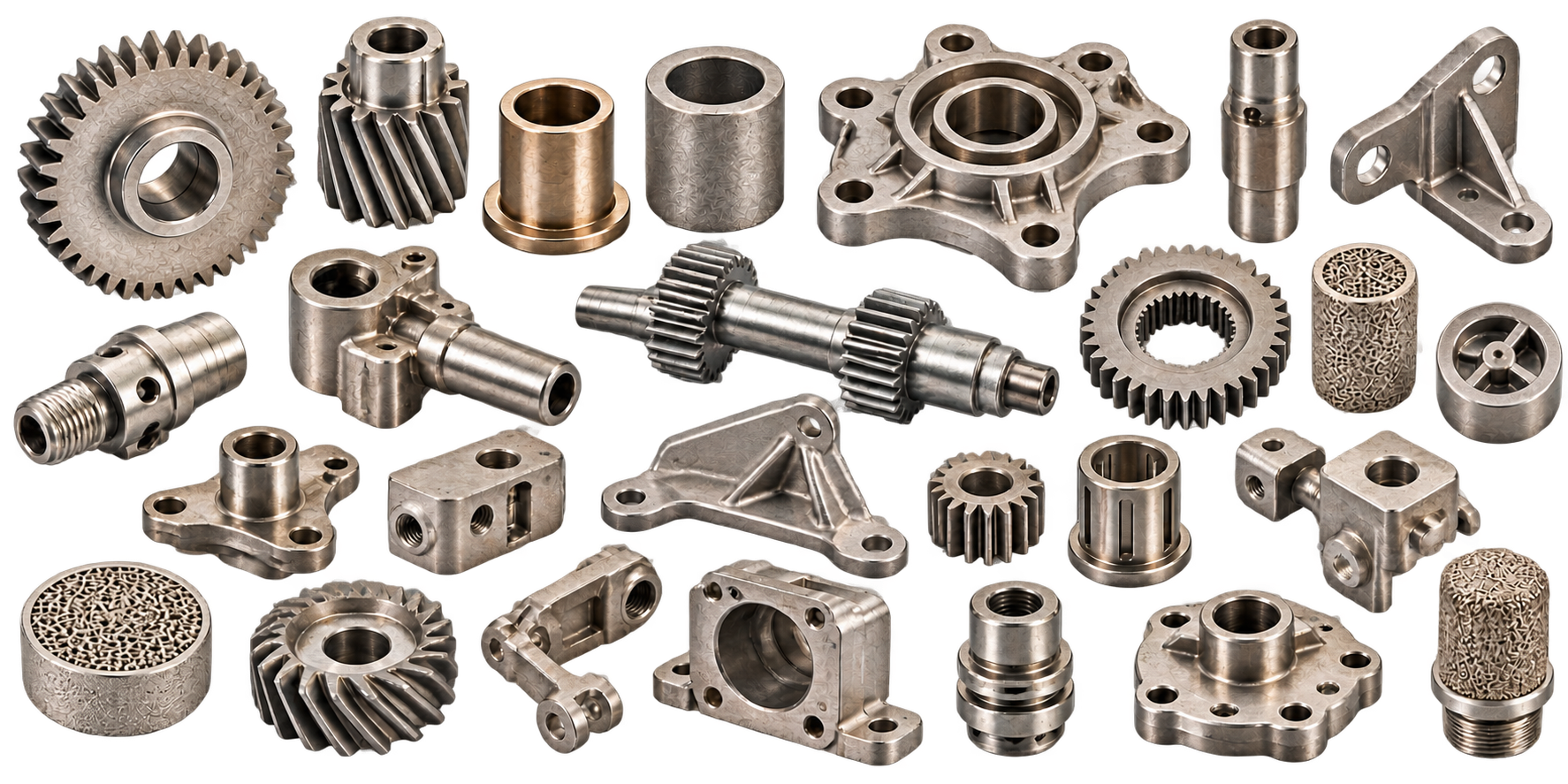
DSB's powder metal manufacturing technologies offer opportunities to produce metal components used in solar energy equipment, including:
- Solar tracking system gears and mechanical components
- Mounting and positioning hardware
- Bushings, spacers, and bearing-related components
- Actuator and drive mechanism components
- Electrical connection and enclosure hardware
- Complex housings, brackets, and structural components
From small, intricate components to larger production applications, DSB works with solar equipment manufacturers to evaluate component designs, material requirements, and manufacturing feasibility.
Manufacturing Capabilities for Solar Components
Solar equipment manufacturers need production processes that balance component durability, dimensional requirements, material performance, and manufacturing cost.
DSB Technologies combines multiple powder metal manufacturing technologies with engineering and metallurgical expertise to help solar manufacturers identify the right process for each application.
Scalable Manufacturing for Durable Solar Components
Press and Sinter provides a cost-effective manufacturing approach for solar equipment components requiring consistent quality, mechanical performance, and repeatable production.
For applications such as gears, bushings, spacers, and mechanical hardware, the process can reduce material waste, minimize secondary machining, and support high-volume manufacturing.
DSB combines powder metal processing with metallurgical and engineering expertise to help solar manufacturers optimize component designs, evaluate material options, and improve production efficiency.
Complex Solar Components. Fewer Manufacturing Steps.
Metal Injection Molding (MIM) enables the production of intricate metal components with complex geometries, detailed features, and demanding dimensional requirements.
For solar tracking mechanisms, actuator components, and specialized hardware, MIM offers opportunities to consolidate multiple features into a single component, reduce secondary machining, and improve manufacturing efficiency.
DSB's expertise in MIM, material development, and sintering helps solar equipment manufacturers evaluate complex designs and establish a scalable approach to production.
Greater Design Freedom for Solar Component Innovation
Metal Binder Jetting gives solar equipment manufacturers greater flexibility to explore complex geometries, integrated features, and component designs that may be difficult or costly to manufacture using conventional processes.
The technology enables engineers to evaluate new design possibilities, reduce assembly complexity through part consolidation, and develop components without traditional forming tooling.
Combined with DSB's sintering and metallurgical expertise, Metal Binder Jetting provides a path for evaluating innovative solar component designs and their potential transition toward production.
Metallurgical Expertise for Demanding Solar Applications
Solar equipment components must withstand mechanical loading, temperature fluctuations, wear, and environmental exposure while maintaining reliable performance.
Sintering plays a critical role in developing the material properties, dimensional consistency, and structural integrity required for powder metal components.
DSB's conventional and high-temperature sintering capabilities, combined with deep metallurgical expertise, help manufacturers optimize materials and processing conditions to meet application-specific performance and production requirements.
Materials & Performance Requirements
Solar energy components must maintain reliable performance through years of environmental exposure, temperature fluctuations, mechanical loading, and repeated operation. Selecting the right material is critical to achieving the strength, corrosion resistance, wear characteristics, and dimensional stability each application requires.
DSB engineers and metallurgists work with solar equipment manufacturers to evaluate material options based on component function, operating environment, design complexity, and production requirements.
From stainless steels to engineered alloy materials, DSB helps manufacturers balance durability, material performance, and cost-effective production through advanced powder metal technologies and metallurgical expertise.
300 Series Stainless Steel
Corrosion Resistance & Material Versatility
4140 Alloy Steel
Mechanical Strength & Toughness
316L Stainless Steel
Corrosion Resistance & Material Performance
400 Series Stainless Steel
Strength, Hardness & Wear Resistance
17-4 PH Stainless Steel
High Strength & Corrosion Resistance
The Right Material Starts With the Application
Material selection for solar energy components depends on mechanical strength, corrosion resistance, wear resistance, environmental exposure, and manufacturing requirements. From solar tracking systems to mounting hardware, choosing the right material supports long-term durability and reliable performance.
DSB combines metallurgical expertise with advanced powder metal manufacturing technologies to help solar equipment manufacturers evaluate material options and develop cost-effective, scalable production solutions.