Skip to content

Powder Metal Manufacturing for Flow Control Components

DSB Technologies manufactures porous and precision metal components for industrial flow control applications using powder metallurgy, sintering, and Metal Injection Molding (MIM). Our manufacturing capabilities support filtration, flow restriction, pressure regulation, and the controlled movement of liquids and gases throughout industrial systems.

Drawing on extensive expertise in engineered porosity and metallurgy, DSB works with manufacturers to develop components that meet precise requirements for permeability, mechanical strength, corrosion resistance, and production consistency. From custom sintered metal filters to intricate mechanical components, we help engineers navigate material selection, design considerations, and manufacturing processes to meet the demands of each application.

REQUEST A QUOTE

Why Flow Control Manufacturers Partner with DSB

Flow control components are subject to varying pressures, temperatures, and fluid conditions, each with distinct material and performance requirements. For porous metal components, pore structure determines permeability and influences resistance to liquid or gas flow.

DSB Technologies offers manufacturing expertise in:

  • Engineered porosity and permeability
  • Sintered metal filtration
  • Controlled fluid and gas flow
  • Application-specific pore size and distribution
  • Pressure drop and flow resistance considerations
  • Corrosion and temperature-resistant materials
  • Complex metal component geometries
  • Custom powder metal compositions
  • High-volume, repeatable manufacturing
  • Reduced machining through near-net-shape production
IMG_3917 (1)

appliances+image

Typical Applications & Components

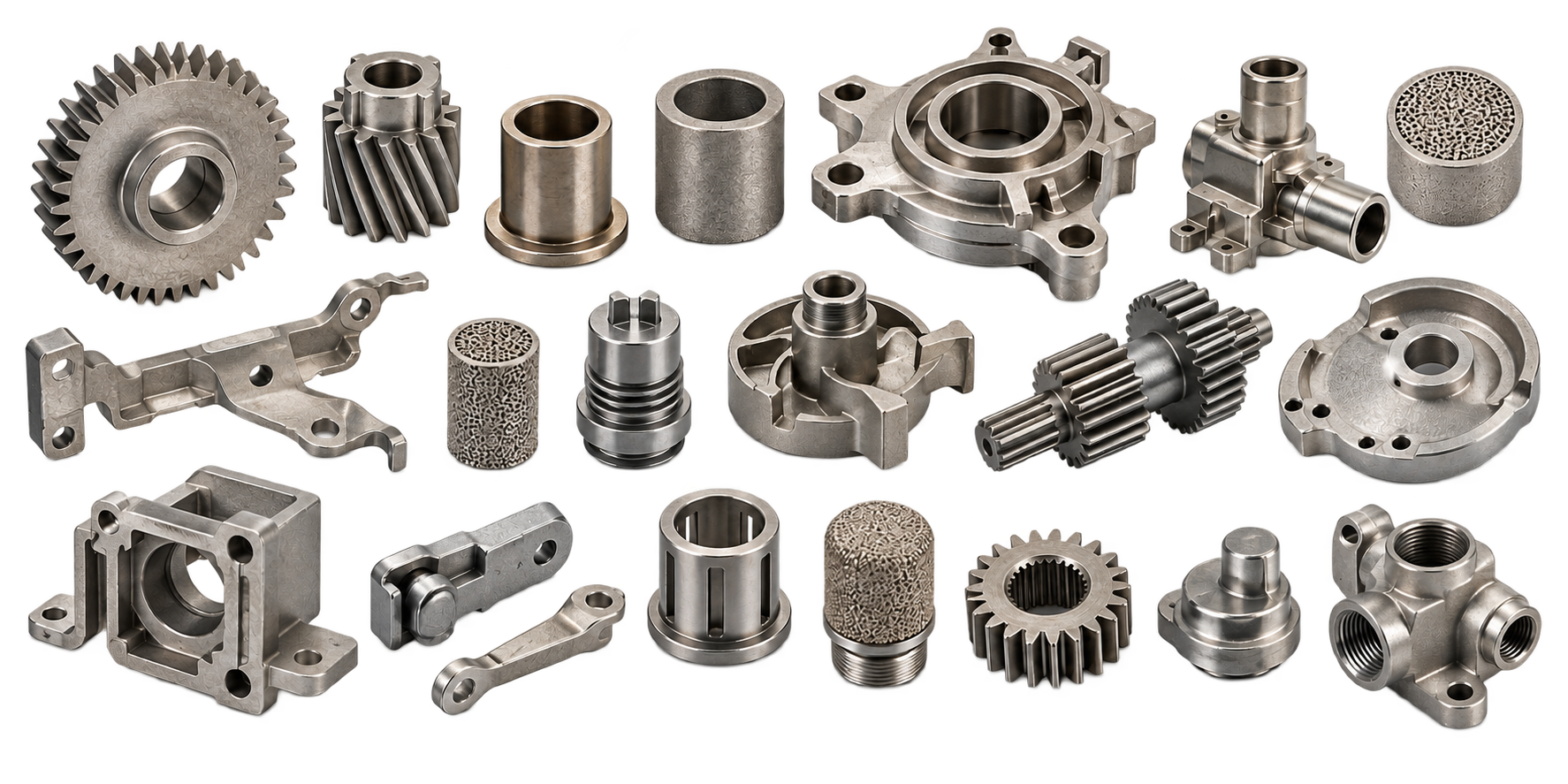
DSB's powder metal manufacturing capabilities support porous and precision metal components used in fluid and gas flow control systems, including:

  • Flow Restriction: Sintered metal restrictors and porous inserts for controlled liquid and gas flow
  • Filtration: Porous metal filters and filtration elements for particle removal from liquids and gases
  • Pressure Equalization & Venting: Breathers and porous vents for pressure equalization and gas exchange
  • Pneumatic Systems: Sintered exhaust silencers and porous elements for compressed air systems
  • Gas Safety: Sintered metal flame arrestor elements for appropriate gas-handling applications
  • Valves & Regulators: Precision metal components for valve mechanisms, pressure regulators, and actuation assemblies


Manufacturing Capabilities for Flow Control Components

Component geometry, material properties, and manufacturing precision are key considerations in flow control applications. DSB's powder metal technologies support both porous components for controlled fluid and gas passage and dense metal parts for mechanical flow control assemblies. 

Produce metal components with porosity tailored to application requirements.

DSB manufactures sintered metal filters and porous elements in various shapes and sizes. Engineered pore structures accommodate filtration, flow restriction, venting, and applications requiring controlled permeability. Porous elements can also be integrated into fittings through press-fitting or sinter-bonding.

Explore Porous Filter Production

Manufacture porous and structural components through powder compaction and sintering.

Press-and-sinter manufacturing allows for controlled material density, including engineered-porosity grades used in filtration and venting applications. DSB's compaction capabilities accommodate a range of component geometries and offer economical production for suitable medium- to high-volume applications.

Explore Powder Metallurgy Technology

Develop pore structure, density, and mechanical properties through controlled sintering.

Sintering bonds metal particles to establish component strength and structural integrity. Conventional and high-temperature processes offer different levels of densification, allowing manufacturers to evaluate material properties for porous or structural flow control components.

Explore Sintering Capabilities

Manufacture intricate metal components for mechanical flow control assemblies.

MIM produces complex metal geometries with detailed features and tight dimensional requirements. For flow control manufacturers, the process may offer an alternative to machining intricate components used in valves, regulators, and actuation assemblies, particularly at higher production volumes.

Explore Metal Injection Molding

Evaluate material composition, component design, and manufacturing feasibility.

DSB's metallurgical team works with manufacturers to assess powder characteristics, corrosion resistance, mechanical properties, and processing requirements. For porous components, material development also addresses pore size, shape, and distribution to meet specific filtration and flow requirements.

Explore Metal Powders & Materials


Materials & Performance Requirements

Flow control applications expose metal components to different pressures, temperatures, and fluid environments. Material selection addresses corrosion resistance, mechanical properties, and operating conditions, while porous components introduce additional requirements for pore structure, permeability, and pressure drop.

DSB offers stainless steels, specialty alloys, and engineered powder metal materials for these applications, including:

300 Series Stainless Steel

Corrosion Resistance & Chemical Compatibility

316L Stainless Steel

Corrosion Resistance & Porous Metal Applications

Nickel-Based Alloys

Corrosion & Elevated-Temperature Resistance

400 Series Stainless Steel

Strength, Hardness & Wear Resistance

Engineered Porosity (EP) Grades

Controlled Pore Structure & Permeability

Custom Powder Metal Blends

Application-Specific Material Properties

Develop Your Flow Control Components with DSB

From sintered metal filters to precision flow control components, DSB Technologies works with manufacturers to address filtration, flow restriction, and permeability requirements. Our engineering and metallurgical teams assess component designs, operating conditions, and production requirements to determine appropriate materials and manufacturing processes.