High-Volume, Low-Cost Manufacturing for Defense Applications (Sea, Air, Land)
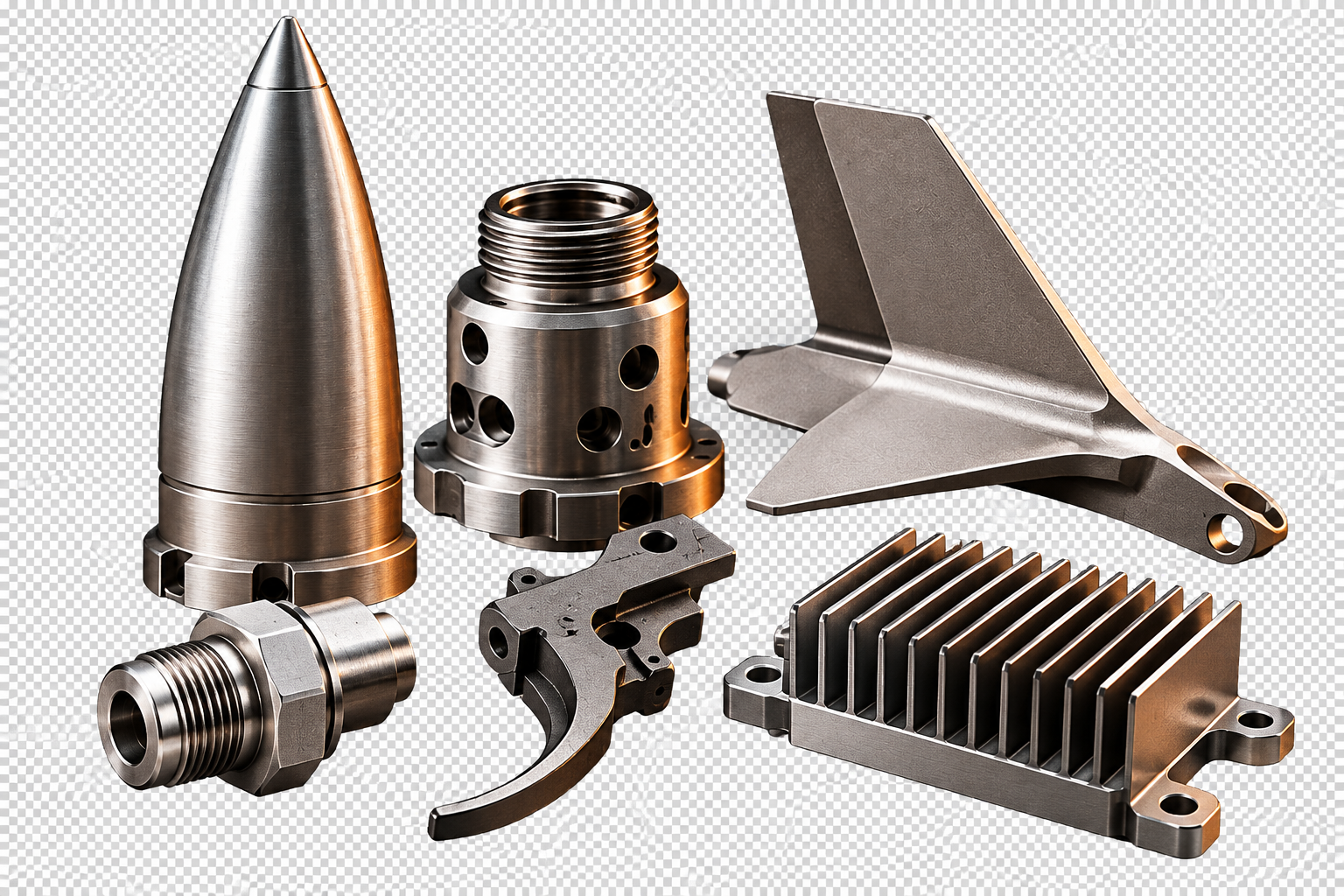
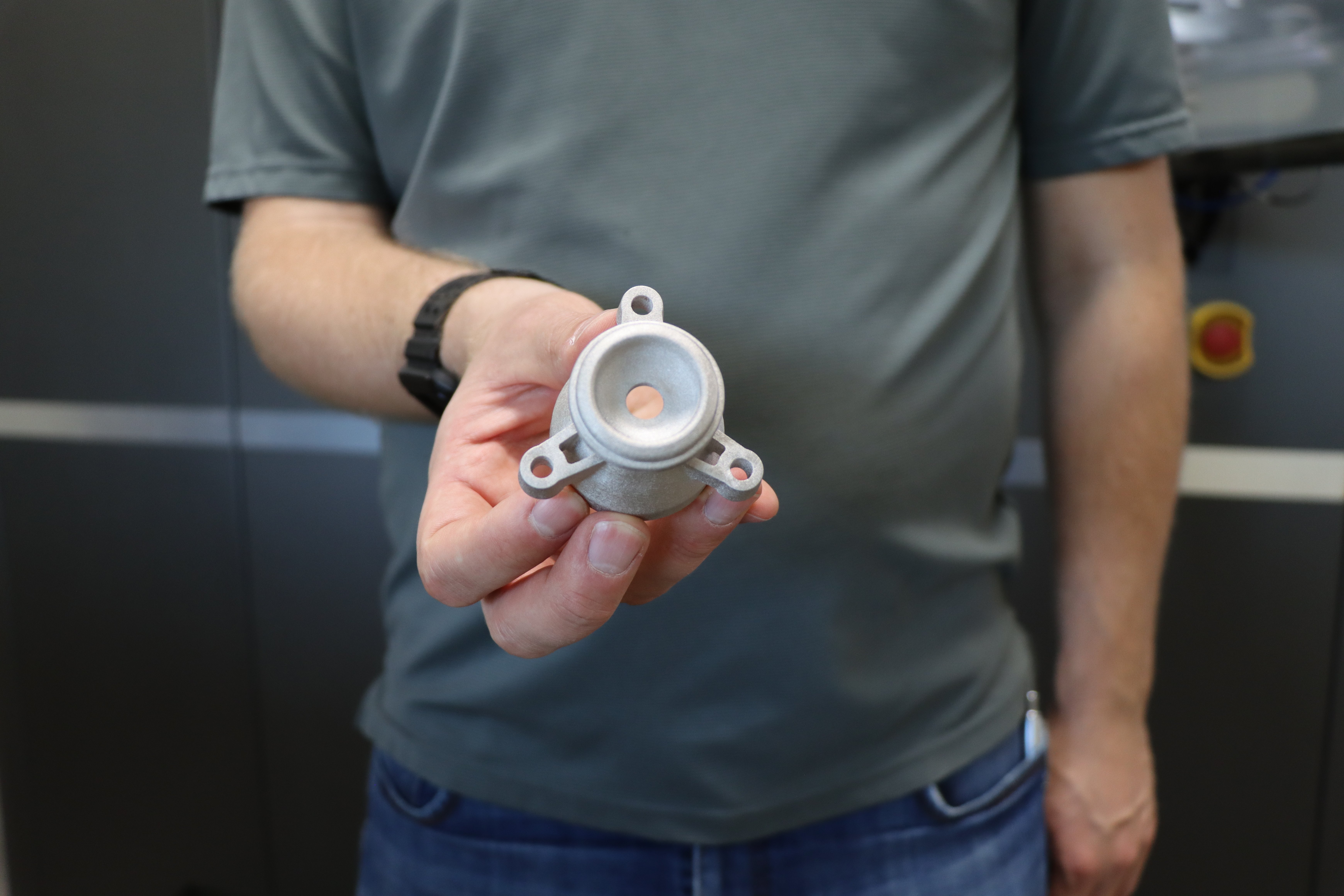
DSB Technologies manufactures components for defense applications utilizing press & sintering, metal injection molding (MIM), and Binder Jet additive (AM) technologies. Our manufacturing expertise includes parts for munitions, ammunition, and fuzing systems, weapon system components, and marine and aerospace applications. We leverage near-net-shape manufacturing to replace expensive machined components and multi-part assemblies with lower cost and rapid availability. This transition maximizes material utilization and reduces the high overhead of traditional milling and machining to lower your total cost per part, provide innovative solutions, manufacturing flexibility, and improve performance.
If you have complex, difficult lead-time machined parts, request a quote today!
Replacing Conventional Machining with Powder Metallurgy
Defense manufacturers face increasing pressure to lower costs on high-volume components currently machined or produced as multi-part assemblies. DSB Technologies optimizes and lowers the cost of these complex components through a combination of the following:
- Near-net shape molding which eliminates costly secondary operations
- Corrosion resistance, magnetic variation, or other custom physical properties
- Significant cost savings vs. machining at volume
- Custom material composition
- Complex geometry
- Recyclable, low-waste materials
- Component consolidation/combination to eliminate assembly operations and failure points
- High-volume press & sinter components, low cost
- Binder jetting for rapid prototyping (usable prototypes), LRIP, and low volume
Typical Applications / Parts
Our manufacturing capabilities include, but are not limited to components for:
- Fuzing and related components
- Firearms and weapon components (triggers, sears, guards, interrupters, mounts)
- Munitions
- Ammunition and gun systems
- Guidance fins and aerodynamic components
- Grenade components
- Drone & UAV components
- Heatsinks, connectors and adapters
- Nose cones, ballistic caps and warheads
Manufacturing Technologies
Our manufacturing infrastructure integrates high-volume production with advanced prototyping capabilities backed by extensive engineering and DFM support:
Produce complex defense components at scale while reducing machining, assembly, and part count.
MIM is well-suited for smaller, intricate metal components such as triggers, sears, guards, interrupters, mounts, fuzing components, connectors, and other geometries where repeatability and production economics matter.
Powder metal compaction provides an efficient path to high-volume production for defense components with repeatable geometry and performance requirements. By forming components near net shape, the process can reduce material waste and machining while supporting production volumes where conventional manufacturing methods may become costly or inefficient.
Sintering transforms compacted or formed metal components into production-ready parts with the material properties required for demanding defense applications. DSB combines extensive sintering capacity with deep metallurgical expertise to control densification, material performance, dimensional consistency, and repeatability across production.
Defense components often require more than selecting a standard material.
DSB combines metallurgical expertise with prototyping and application development to evaluate material options, manufacturing feasibility, and component performance before moving toward production. This helps engineering teams develop a practical material and manufacturing path around the requirements of the application.
Metal binder jetting creates new manufacturing options for complex defense components where conventional tooling or geometry limits the design. DSB combines additive manufacturing with sintering and metallurgical expertise to help programs move from design iteration and prototyping through bridge production and, where appropriate, scalable serial production.
Defense components often require additional processing after forming and sintering to meet final application requirements. DSB helps coordinate secondary operations as part of the overall manufacturing strategy, reducing supplier handoffs and supporting a more streamlined path from a near-net-shape component to a finished production part.

Materials Engineered Around Defense Application Requirements
Material selection in defense manufacturing starts with the application. DSB works with engineering teams to evaluate material requirements alongside component geometry, manufacturing process, performance needs, and production scale.
Our powder metal technologies support a range of material systems for demanding applications:
Have a specific material or performance requirement?
Stainless Steels
Material options for components where corrosion resistance, strength, wear resistance, or other application-specific properties are important.
Tungsten and Other High-Density Materials
High-density material solutions for applications where mass, density, packaging constraints, or other specialized performance requirements drive material selection.
Iron-Based Alloys
A broad range of material options for structural and mechanical components requiring a balance of strength, durability, manufacturability, and production economics.
Lightweight Material Options Similar to Automotive Programs
When an off-the-shelf material is not the right fit, DSB's metallurgical team can help evaluate and develop material solutions around the performance and manufacturing requirements of the application.
Could Powder Metal Reduce Your Part Cost by 60–80%?
DSB works with defense manufacturers to identify machined and multi-part components that may be better suited for powder metal manufacturing. By evaluating geometry, materials, performance requirements, and production volume, our engineers can determine whether a near-net-shape process can reduce machining, consolidate components, and deliver significant cost savings at scale.